#7TechnologyEurope
Hackers Turn Supermarket Freezers to 50°C Across Europe
3 Nov 2026, 04:52
Key facts
- Nov 2 2026: Dozens of stores hit including ~40 Delhaize (Belgium/Luxembourg), several ICA/Coop (Sweden), 13 SuperValu (Ireland); temps hit 50°C forcing food disposal, per Reuters and chains.
- Follows identical Oct 2026 attack on ~700 French supermarkets using same remote controller exploit; no group claimed responsibility, cyber centers in Sweden/Belgium investigating (BBC, AP).
More detail
- One Delhaize store reported €100,000 losses excluding closure costs; Carrefour called impact on its 15 Belgian stores 'extremely limited' while others discarded entire stock.
- Sabcobel CEO confirmed attackers targeted defrost mode on their units; similar to French case where hundreds of stores lost perishables and some units caught fire.
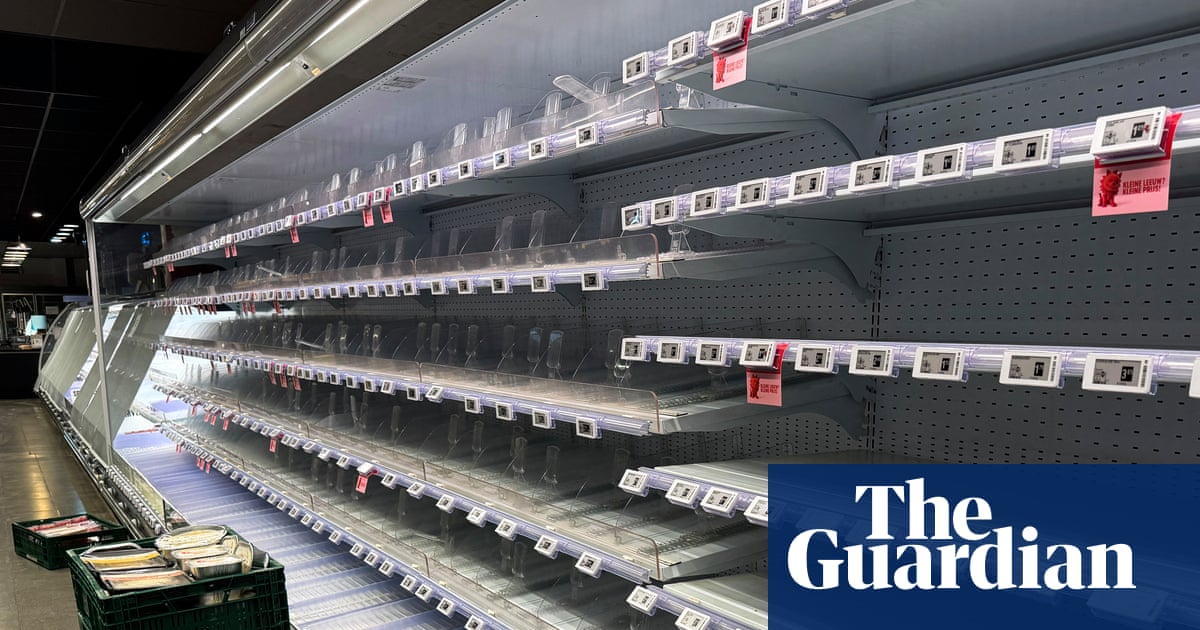
- No disruption to distribution centers or deliveries, but visible piles of spoiled goods created immediate consumer impact and media images.
- Belgium's cybersecurity centre noted attacker may never be identified; Sweden's centre is also investigating.
- Direct voices: "Everything is destroyed" – Swedish ICA store manager after freezers hit 50°C overnight.
The views
State media Side A
State-linked hybrid sabotage of food supply
- European public broadcasters report simultaneous remote hacks raising supermarket freezer temps to 50°C across multiple countries overnight.
- Incidents follow identical French attack last month and occur amid warnings of intensified Russian hybrid operations.
- EU officials label it a deliberate effort to undermine consumer confidence in food systems and test resilience.
More detail
- Dozens of stores affected but creates highly visible images of wasted food and empty shelves
- National cyber centres in Sweden, Belgium and UK coordinating investigations
- Context repeatedly tied to post-2022 Ukraine tensions and infrastructure sabotage patterns
- Calls for urgent action to secure or isolate critical IoT devices from public internet
State media Side B
Retailers neglected basic IoT security
- State outlets report systems were left internet-facing with default credentials long after known risks and vendor warnings.
- Note manufacturers like Danfoss urged patching and disconnection after the French attacks, but many ignored it.
- Frame incidents as proof of European corporate and regulatory failure on critical infrastructure rather than sophisticated foreign ops.
More detail
- - Attackers simply accessed exposed controllers to run defrost cycles and disable alarms—no malware or zero-days needed.
- - Public scans revealed thousands of vulnerable refrigeration units still online weeks later.
- - Highlights hypocrisy of blaming hybrid threats while failing to isolate OT systems from the public internet.
- - Emphasizes food spoilage resulted from treating supermarket freezers like unsecured consumer gadgets.
Independent Side A
State actors signaling via hybrid infrastructure attack
- Independent reporting notes the psychological impact of emptying supermarket shelves through remote temperature sabotage.
- Links the pattern to nation-state capabilities, with Russia or China most discussed given timing and lack of ransom.
- Frames the events as a wake-up call for protecting food supply chains from sophisticated state-sponsored disruption.
More detail
- No hacktivist claim or ransomware demand despite clear opportunity
- Psychological effect on populations seeing food wasted is a classic hybrid tactic
- Western intelligence has warned of escalating Moscow sabotage campaign
- Limited per-store impact but demonstrates scalable technique against critical infrastructure
Independent Side B
Basic IoT security failures enabled easy exploit
- Outlets detail how legacy refrigeration controllers were left internet-facing with weak or default credentials.
- Vendors sent warnings after the French attacks yet some systems remained exposed and unpatched.
- Attack required no advanced tools—just access to flip defrost mode and disable alarms—proving corporate security negligence more than elite hacking.
More detail
- Systems from Danfoss and Sabcobel repeatedly implicated in both waves
- Retailers could have air-gapped, used VPNs or updated firmware but many did not
- Impact contained because only specific models and stores were vulnerable
- Emphasizes financial pressure to keep old cheap equipment running remotely
X
Posts from both sides
- Side A: Top individual X voices in early results focused primarily on technical vulnerabilities rather than strongly attributing the attacks to specific state actors or pushing a hybrid warfare narrative.
- Side B: Tech users on X posted detailed breakdowns showing attackers disabled alarms then forced continuous defrost cycles to 50°C.
Side A: Western governments, EU officials and aligned media hold that these are likely state-linked (Russia or China) hybrid attacks meant to test capabilities, disrupt food supplies and undermine public confidence.
- Top individual X voices in early results focused primarily on technical vulnerabilities rather than strongly attributing the attacks to specific state actors or pushing a hybrid warfare narrative.
Side B: Security researchers, technical experts and independent analysts hold that the attacks succeeded mainly because companies left outdated refrigeration controllers exposed online with poor or no security, making them trivial targets for any skilled individual.
- Tech users on X posted detailed breakdowns showing attackers disabled alarms then forced continuous defrost cycles to 50°C.
- Highlighted legacy equipment with default passwords or no firewalls sitting openly online years after similar incidents.
- Called it "insane" that industrial food systems were treated like consumer gadgets instead of critical infrastructure needing isolation.
More detail
- Exact sequence: 2am remote access, override controls, no alerts triggered
- Post-France advice to take affected units offline was ignored by some operators
- Compares to Mr. Robot scenarios where everyday industrial gear becomes a weapon
- Warns the same flaw likely exists across other unnoticed supply-chain and building systems
Most likely true
Retailers, equipment makers and investigators confirm a real cyberattack exploiting internet-exposed refrigeration controllers that let anyone with basic access flip them to defrost/high-temp mode.
The method was simple, not sophisticated, and many systems ignored post-France warnings to disconnect or secure them.
More detail
- Multiple independent retailer confirmations and manufacturer statements establish it was remote unauthorized access, not random IT failure or sensor error.
- The consistent technique (disable alarms, force defrost, crank heat) across countries and time zones points to coordinated or copied tooling.
- Evidence from prior similar incidents shows these systems were known to be exposed; the attacks required minimal sophistication.
- Absence of financial demand or public claim makes pure criminal ransomware less likely than demonstration, protest or state probing.
Grey areas
- Who exactly carried out the attacks and was their goal sabotage, testing, or something else?
- Are the French and European waves directly linked to the same actor or copycats?
More detail
- Exact number of stores affected still varies by chain reporting; total food waste value not yet tallied but likely several million euros.
- No public forensic details released yet on the specific malware, IP origins or command-and-control used.
- Distinction between one coordinated campaign versus opportunistic copycats after the high-profile French attacks remains unclear.
Still curious? Ask about this story
Grok checks every side again and answers with sources.
Popular questions
Ask anything about this story. It's free with an account, 1 a week.
Coverage
8 sources · 2 countries
- State-funded 3
- Independent 3
- X / on the ground 2
GBRU
All sources
- BBC Russian ServiceХакеры атаковали холодильные системы супермаркетов семи стран ЕвропыState-funded · United Kingdom
- @Adellbahhackers just spent the night turning supermarket freezers into ovens across europeX / on the ground
- @tQuietEngineerA wild Mr. Robot style cyberattack is unfolding across Europe right nowX / on the ground
- Ars TechnicaFridge hack costing millions and sparking fires stemmed from poor securityIndependent
- The GuardianWho is hacking Europe’s supermarket fridges and freezers, and why?Independent · United Kingdom
- ReutersNew cyberattack on supermarket fridges sweeps across EuropeIndependent · United Kingdom
- BBC NewsShop freezers in seven European countries hit by cyber-attackState-funded · United Kingdom
- Российская газетаХакеры атаковали холодильники в эстонских супермаркетах, подняв в них температуру до +50State-funded · Russia