Under the radarPolitics & worldAsia
China's Fifth Plenum Reins in Regional 'Top Leaders'
Big news in one part of the world that most of the world missed.
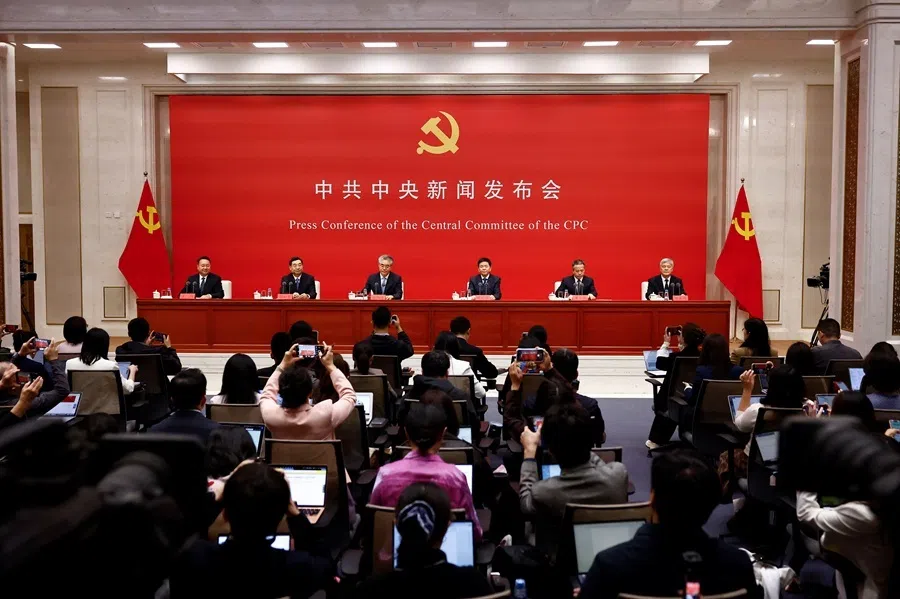
Key facts
- Oct 26-29 2026 plenum: adopted resolution on 'full and rigorous Party self-governance'; full text published Nov 1-2 detailing oversight of regional leaders (Xinhua/SCIO).
- Only 279 of ~376 Central Committee members attended (~74%); 33 expelled including 16+ senior military officers like ex-CMC vice chair Zhang Youxia (plenum communique and analysts).
- Disciplinary bodies opened 800,000 cases in first nine months of 2026; plenum confirmed expulsions and promoted 10 alternates to fill vacancies.
- Resolution lists over 200 measures on Party spirit, democratic centralism, cadre selection favoring loyalty and competence, and anti-'hidden rules'.
- Xi directly addressed skepticism, stating strict governance promotes rather than hinders economic and social development.
- Direct voices: "The top leader must speak last so subordinates can express views before the outcome is fixed." - Official plenum resolution
The views
State media Side A
Self-governance ensures unity and purity
- Since 2012 the Party under Xi has achieved historic successes in full and rigorous self-governance, opening millions of discipline cases.
- The Fifth Plenum resolution targets new threats like hidden corruption via proxies, virtual currency, and revolving doors between officials and business.
- Requiring regional top leaders to speak last and subjecting them to stricter oversight prevents personal fiefdoms, enforces democratic centralism, and guarantees faithful implementation of central policies.
- Over 983,000 disciplined in 2025; continued high numbers in 2026.
- Emphasizes Party spirit, high-caliber loyal cadres, and top-down systems.
- Prepares groundwork for successful 21st Party Congress in 2027.
- Xi states it promotes economic and social development.
State media Side B
Purges and low attendance show instability
- Plenum attendance was only 74% with many senior cadres absent due to ongoing investigations.
- Record 33 expulsions confirmed, including top military figures from Central Military Commission and theater commands.
- Focus on internal discipline rather than economic planning, combined with speculation on Xi's extended rule, highlights priority on loyalty and control over renewal.
- 16+ military officials among those removed; vacancies filled by promoting select alternates.
- Public broadcasters note this occurs ahead of 2027 Congress where fourth term is expected.
- Raises questions about military readiness and bureaucratic paralysis from fear.
- Coverage frames it as continuation of anti-corruption but notes unusual scale.
Independent Side A
Rules curb local fiefdoms and hidden graft
- The 17,000-word resolution published by Xinhua explicitly orders principal leaders to speak last in meetings so real opinions can surface.
- It bans treating jurisdictions as personal property and demands supervision that reaches the very top leaders.
- Combined with measures against 'white gloves', crypto bribes, and collusion, this strengthens accountability and should improve policy execution and Party integrity.
- Protects those who speak honestly while eliminating unwritten rules and backroom deals.
- County-level and above Party bodies must report on governance responsibilities regularly.
- Xi directly rebutted claims that strict governance harms growth.
- Seen as necessary evolution of cadre management for national rejuvenation.
Independent Side B
Centralization signals fragility and control
- Unusually low plenum attendance and dozens of high-level expulsions including former CMC vice chairman reveal breadth of purges and military cleanup.
- Emphasis on supervising every '一把手' and demanding absolute loyalty indicates excessive personalization of power under Xi.
- While anti-corruption is real, the selective nature, absent slogans, and preparation for another term suggest it prioritizes eliminating threats over institutional health or economic pragmatism, risking paralysis.
- Analyses link absences directly to disciplinary actions against Central Committee members.
- Promotions skipped some ranked alternates; focuses on young loyal regional officials.
- Critics note 'inner-party democracy' language may critique over-concentration.
- Questions remain on whether it solves or exacerbates governance challenges.
X
Posts from both sides
- Side A: Xi has repeatedly stressed full and rigorous self-governance as key to the Party's long-term ruling position.
- Side B: Record expulsions of 33 Central Committee members including top generals and low plenum attendance expose deep instability.
Side A: Chinese leadership and state media: Reining in regional leaders via strict self-governance and new rules like 'speak last' prevents corruption, fiefdoms, and disloyalty while ensuring unified execution of central policies for stability and rejuvenation.
- Xi has repeatedly stressed full and rigorous self-governance as key to the Party's long-term ruling position.
- The plenum resolution and new rules reinforce loyalty, discipline, and anti-corruption at all levels including regional leaders.
- Supporters view the measures as essential self-revolution that cleans the Party, deters graft, and ensures unified leadership for China's continued rise.
- Highlights quotes on Party building and vitality under Xi Thought.
- Frames purges as removing 'hidden dangers' rather than instability.
- Emphasizes positive impact on modernization drive.
Side B: Independent analysts, Western public broadcasters, and critical X voices: This represents Xi's extreme power centralization through selective purges and loyalty tests, creating fear, empty seats, potential paralysis, and institutional fragility ahead of his likely fourth term.
- Record expulsions of 33 Central Committee members including top generals and low plenum attendance expose deep instability.
- New rules reining in regional leaders and demands for total loyalty further personalize power around Xi ahead of 2027.
- Independent voices argue this transforms anti-corruption into a tool for factional control, risks bureaucratic paralysis, undermines collective leadership, and creates succession uncertainty.
- Military purges hit CMC General Office directors and theater commanders.
- Empty chairs and absent slogans more telling than official rhetoric.
- Questions if loyalty over competence weakens institutions long-term.
- Compares unfavorably to open debate in other systems.
Most likely true
Official documents, attendance data, and cross-reported expulsions confirm the plenum centered on centralizing discipline, curbing regional autonomy, and purging disloyal or corrupt senior figures (including military) to solidify Xi's authority before the 2027 Congress.
The 'speak last' and anti-fiefdom rules address real governance problems but are part of broader power consolidation; corruption crackdowns mix genuine cases with political enforcement.
- The published resolution, communique, and cross-verified reporting from state and independent outlets establish the facts of the agenda, attendance, expulsions, and specific new disciplinary mechanisms beyond reasonable doubt.
- Emphasis on supervising 'top leaders' (一把手) at all levels below the center directly addresses documented local defiance and corruption risks.
- Scale of recent cases and military turnover indicates serious internal challenges; centralization is deliberate and likely to continue.
- Xi's explicit rebuttal of claims that strict governance harms the economy suggests internal debate on the trade-offs.
Grey areas
- Whether specific high-level military and civilian purges stem primarily from corruption, factionalism, or policy disagreements.
- How local 'top leaders' will adapt in practice—will fear lead to excessive caution and slower economic decisions?
- Analysts differ on whether purges primarily target corruption or also political rivals and cliques; official language cites both disloyalty and graft.
- Unclear how 'speak last' rule and top-leader oversight will function without creating gridlock or overly cautious officials fearful of initiative.
- Long-term success in eliminating 'iron-cap princes' (untouchable elites) versus sustaining economic dynamism remains unproven.
Still curious? Ask about this story
Grok checks every side again and answers with sources.
Popular questions
Ask anything about this story. It's free with an account, 1 a week.
Coverage
10 sources · 5 countries
- Official 1
- State-funded 3
- Independent 3
- X / on the ground 3
CNHKUSSGZA
All sources
- @dyw1968316 (Deng Yuwen)Why This CCP Fifth Plenum Matters So Much to Xi JinpingX / on the ground
- CGTNCPC plenum concludes, adopting resolution on persevering with full, rigorous Party self-governanceState-funded · China
- Xinhua/SCIOFull text: Resolution of the Central Committee of the Communist Party of China on Certain Major Issues concerning Persevering with Full and Rigorous Party Self-GovernanceOfficial · China
- Global TimesCPC plenum concludes, adopting resolution on persevering with full, rigorous Party self-governanceState-funded · China
- South China Morning Post‘Speak last’: China’s fifth plenum moves to rein in regional leadersIndependent · Hong Kong SAR China
- NPRKey takeaways from this week’s key political meeting in BeijingState-funded · United States
- ThinkChinaMissing cadres, absent slogans: Decoding China’s fifth plenumIndependent · Singapore
- News.co.zaSpeak last: China's fifth plenum 2026Independent · South Africa
- @XisMomentsHow does the Communist Party of China strengthen itself and sustain its vitality?X / on the ground
- @mountain_ratsChina expels top generals at fifth plenum... seems Xi's ONE MAN RULEX / on the ground