#7Wonders
BepiColombo orbits Mercury; accounts split on how much the glitch matters
Probe is stable in a longer orbit after software cut the arrival burn short.
25 Nov 2026, 06:21 · All sides · Written by Grok
17 sources · 4 countries🇬🇧 🇺🇸 🇩🇪 🇯🇵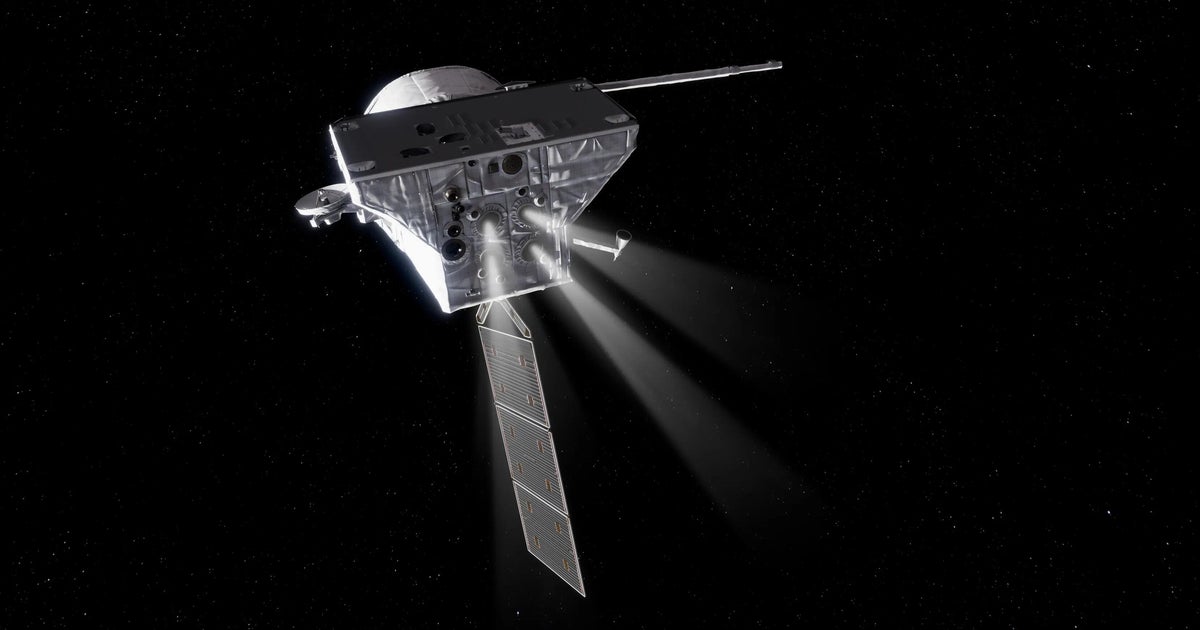
- BepiColombo, a joint ESA and JAXA craft launched in October 2018, entered orbit around Mercury on 21 November 2026.
- A software glitch cut the insertion burn short and sent the spacecraft into safe mode, so the orbit is longer than the one that was planned.
- ESA says the probe is safe and the later schedule still holds.
How the views differ
State media, independent media and top voices on X
Agency officials and mainstream science coverage stressing resilience
The long cruise ended in capture, which is the result the mission spent eight years chasing.
The glitch is admitted, then set beside what did not break: the craft stayed, the new orbit is stable, and the science calendar did not move.
For readers, that means a real fault did not become a lost mission.
- esa.int (Ind.)
- reuters.com (Ind.)
- cbsnews.com (Ind.)
- nature.com (Ind.)
- japantimes.co.jp (Ind.)
- physicsworld.com (Ind.)
Specialist space and technology coverage stressing the fault
Orbit is not denied.
The claim is that the arrival burn was the moment that had to go right, and it did not.
Safe mode is an emergency posture, not a footnote, and a jump from a 58-hour plan to a 75-hour orbit is a real change to years of preparation. Until the cause is public, the celebration sits next to an open fault.
- europeanspaceflight.com (Ind.)
- spacenews.com (Ind.)
- theregister.com (Ind.)
- independent.co.uk (Ind.)
- heise.de (Ind.)
Verified, and not seriously disputed: BepiColombo is in a stable orbit around Mercury. ESA said so on 23 November 2026, and Reuters and other outlets reported that statement. The burn delivered about 77 percent of the planned speed change. The orbit is 75 hours, not 58. The craft entered safe mode. No hardware failure has been identified. Separation is still planned for 9–10 December, and the science phase for April 2027.
Grey areas. Ask to dive deeper
Grok checks every side again and answers with sources.
Popular questions
Ask anything about this story. It's free with an account, 1 a week.
- October 2018
BepiColombo launched by ESA and JAXA.
- 2026
BepiColombo completed eight-year cruise to Mercury.
Coverage
17 sources · 4 countries
- Official 3
- Independent 14
GBUSDEJP
All sources
- esa.intBepiColombo entered Mercury orbit on 21 November 2026 after an eight-year journey, the first use of “weak stability capture” at another planet. ESA NatureOfficial
- nature.comBepiColombo entered Mercury orbit on 21 November 2026 after an eight-year journey, the first use of “weak stability capture” at another planet. ESA NatureIndependent
- esa.intThe burn started near 18:24 UTC at about 635 km altitude and was planned for 37 minutes; a software glitch in attitude guidance and thruster control made the thrusters fire for less time, and the craft entered safe mode. ESA CBS NewsOfficial
- cbsnews.comThe burn started near 18:24 UTC at about 635 km altitude and was planned for 37 minutes; a software glitch in attitude guidance and thruster control made the thrusters fire for less time, and the craft entered safe mode. ESA CBS NewsIndependent · United States
- Investigation ongoing; no hardware failure identified.The burn achieved about 77 percent of the planned change in speed, leaving a 75-hour orbit instead of a 58-hour orbit. European Spaceflight ESAIndependent
- reuters.comESA said on 23 November 2026 that the revised plan needs no further burns, that the two science orbiters are still set to separate on 9–10 December, and that the science phase begins in April 2027. ESA ReutersIndependent · United Kingdom
- ESA (official, multi-national European agency) esa.intSources: ESA, Reuters, CBS News, Nature, Japan Times, Physics WorldOfficial
- Reuters (independent) reuters.comSources: ESA, Reuters, CBS News, Nature, Japan Times, Physics WorldIndependent · United Kingdom
- CBS News (independent) cbsnews.comSources: ESA, Reuters, CBS News, Nature, Japan Times, Physics WorldIndependent · United States
- Nature (independent) nature.comSources: ESA, Reuters, CBS News, Nature, Japan Times, Physics WorldIndependent
- Japan Times (independent) japantimes.co.jpSources: ESA, Reuters, CBS News, Nature, Japan Times, Physics WorldIndependent · Japan
- physicsworld.comSources: ESA, Reuters, CBS News, Nature, Japan Times, Physics WorldIndependent
- SpaceNews (independent) spacenews.comSources: SpaceNews, The Register, The Independent, heise onlineIndependent
- theregister.comSources: SpaceNews, The Register, The Independent, heise onlineIndependent
- independent.co.ukSources: SpaceNews, The Register, The Independent, heise onlineIndependent · United Kingdom
- heise.deSources: SpaceNews, The Register, The Independent, heise onlineIndependent · Germany
- mps.mpg.deMax Planck Institute for Solar System Research (independent research org.) mps.mpg.deIndependent · Germany