#9Culture
European youth strikes split opinion over welfare, war spending, and crowd size
Students protested in at least 20 countries over wages, housing, schools, and military spending.
24 Nov 2026, 00:34 · All sides · Written by Grok
7 sources · 4 countries🇬🇧 🇶🇦 🇨🇳 🇺🇸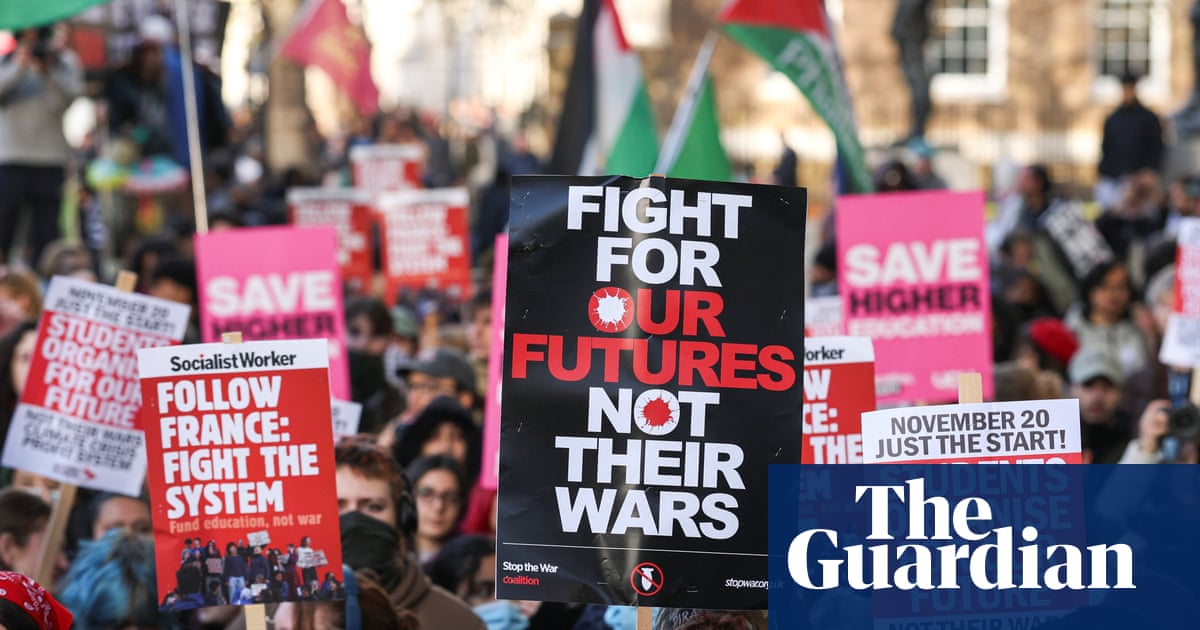
- Students and young people walked out and marched across Europe under slogans such as “Fight for Our Future, Not Their Wars.”
- They called for higher wages, lower rents, stronger schools and public services, less military spending, and climate action.
- Italy saw the widest shutdown; many other cities saw smaller marches that reports mostly called peaceful.
How the views differ
State media, independent media and top voices on X
Youth strikers and anti-rearmament voices
Living costs and rents rose while schools, housing, and public services stayed thin, and governments put large sums into weapons, rearmament, and in some places conscription — forced military service.
Students and more than 50 youth groups answered with one cross-border strike, which they cast as Europe’s biggest coordinated youth protest in recent years and as a demand to move money back to welfare.
For a student, the argument is about whether the next decade funds rent and classrooms or someone else’s arsenal.
- theguardian.com (Ind.)
- democracynow.org (Ind.)
- reuters.com (Ind.)
- aljazeera.com (St.)
- global.chinadaily.com.cn (St.)
Critics focused on mixed demands, modest crowds, and disruption
The same day mixed wage and school demands with anti-war, anti-conscription, Palestine, and “systemic transformation” slogans, so the message was not one clear complaint.
In some countries crowds were more muted than in earlier protest waves, even where a union claimed a million people and transport stopped.
Governments faced political pressure and still had to plan for security, because related marches in the past had drawn police force. For a commuter or pupil, the immediate result can be a late train or a closed classroom, whatever the banner says.
- reuters.com (Ind.)
- aljazeera.com (St.)
- cnn.com (Ind.)
- @Vness_is_late (X)
Protests and strikes did happen across a wide set of European countries on or around November 20, 2026. That is reported by outlets with different funders, including Reuters, The Guardian, Democracy Now!, Al Jazeera, and CNN. The stated demands really did cover wages, rents, education, public services, military spending, conscription, climate, and — in the coalition’s own list — Palestine solidarity and systemic transformation.
Grey areas. Ask to dive deeper
Grok checks every side again and answers with sources.
Popular questions
Ask anything about this story. It's free with an account, 1 a week.
- February 2022
Russia launches full-scale invasion of Ukraine.
- March 2023
Multiple European governments announce increases in defense budgets.
Coverage
7 sources · 4 countries
- State-funded 6
- X / on the ground 1
GBQACNUS
All sources
- The Guardian (independent)The coalition’s stated demands went beyond pay: end militarization, fund education and welfare, climate and social justice, Palestine solidarity, and systemic change. The GuardianState-funded · United Kingdom
- Democracy Now! (independent)Italy’s strike, with CGIL involved, is cited as proof of mass turnout, with some reports of more than 1 million people. Democracy Now!State-funded
- Reuters (independent)Actions in France, Germany, Spain, Portugal, the UK, Austria, Croatia, Albania, and beyond are read as real coordination, not isolated campus gripes. Reuters Al JazeeraState-funded · United Kingdom
- Al Jazeera (Qatar state-funded)Actions in France, Germany, Spain, Portugal, the UK, Austria, Croatia, Albania, and beyond are read as real coordination, not isolated campus gripes. Reuters Al JazeeraState-funded · Qatar
- China Daily (Chinese state-funded)Sources: Democracy Now! (independent) link, The Guardian (independent) link, Reuters (independent) link, Al Jazeera (Qatar state-funded) link, China Daily (Chinese state-funded) linkState-funded · China
- CNN (independent)CNN’s account added police-liaison context and that earlier violence, which is why security stayed part of the story. CNNState-funded · United States
- @Vness_is_late“Higher wages for being a student? Fuck off .. the world is stupid and I now want to go to mars.” — @Vness_is_late postX / on the ground