#4Wonders
Voyager 1 Is the First Human-Made Object One Light-Day From Earth
NASA confirmed the 1977 probe reached the distance on November 18, 2026.
20 Nov 2026, 06:19 · All sides · Written by Grok
14 sources · 3 countries🇺🇸 🇬🇧 🇶🇦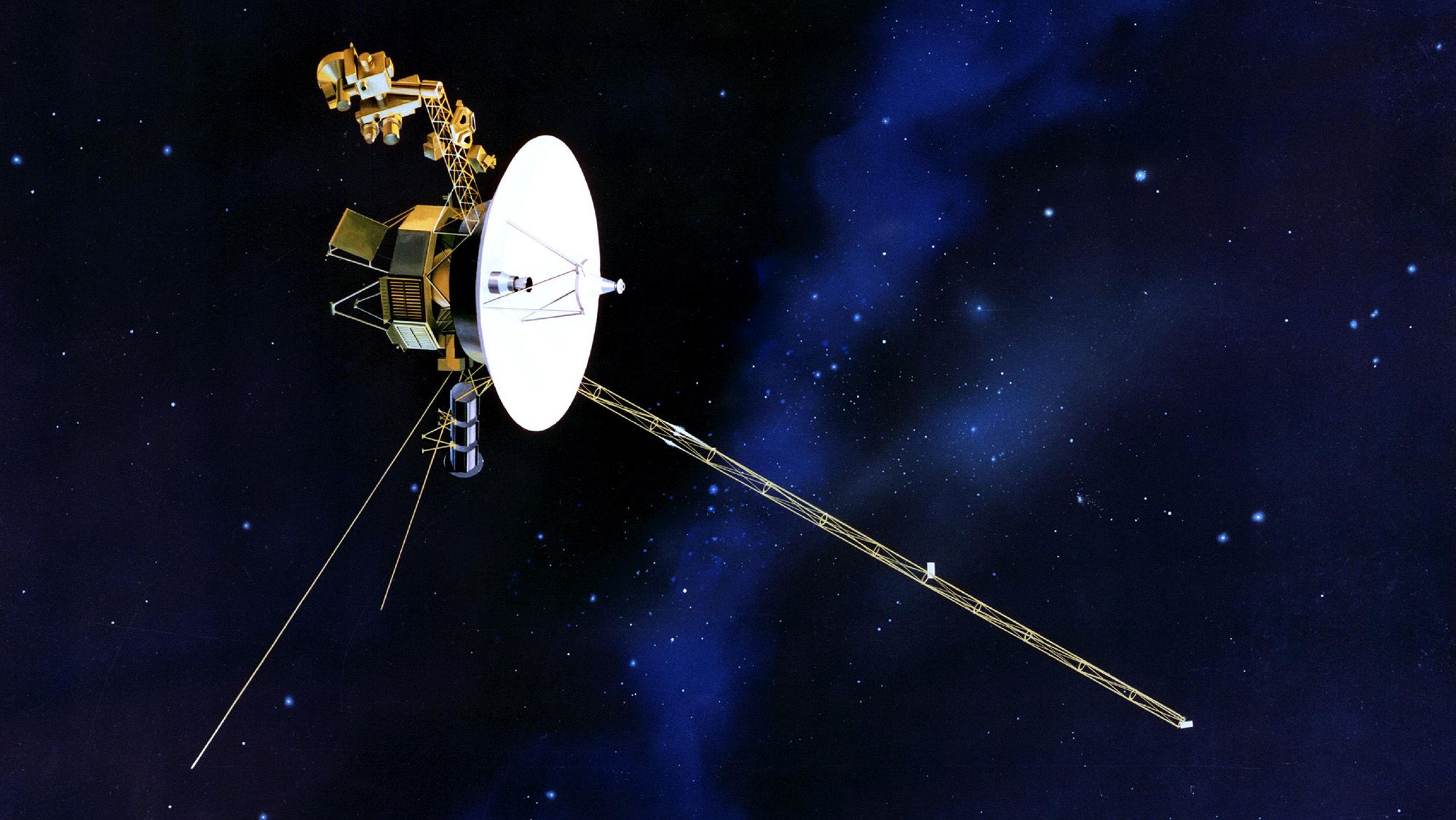
- Voyager 1 crossed one light-day from Earth, a first for anything humans have built.
- A radio signal from there takes a full day each way, so a command and its answer cannot both happen on the same day.
- NASA confirmed the mark after the signal reached Earth, while engineers were already working a computer fault on the probe.
How the views differ
State media, independent media and top voices on X
Mission-celebration and exploration-success narrative
Supporters see a machine that left in 1977, has been in interstellar space since 2012, and is still audible almost 49 years later.
Gold lights on famous buildings point back to the Golden Record, the disk riding along as a greeting if anyone else ever finds it.
In that telling, a computer glitch is a problem to solve, not the story.
- nasa.gov (St.)
- space.com (Ind.)
- reuters.com (Ind.)
- apnews.com (Ind.)
- aljazeera.com (St.)
- planetary.org (Ind.)
Aging-hardware and limited-return narrative
The miles are not the dispute.
The argument is that gold lights and record-book language skip a craft that stopped sending science data on November 14, loses about 4 watts a year, and is projected to fall silent around 2036.
“Not done yet,” in that reading, means a short window, not an open future.
- science.nasa.gov (St.)
- livescience.com (Ind.)
- space.com (Ind.)
- reuters.com (Ind.)
- scientificamerican.com (Ind.)
- iflscience.com (Ind.)
- theregister.com (Ind.)
- wired.com (Ind.)
The distance is the surest fact. NASA says Voyager 1 reached one light-day at 5:16 a.m. EST on November 18, 2026, and Madrid’s Deep Space Network dish received the confirming signal on November 19. Reuters and AP report the same time, distance, and confirmation. That part is solid.
Grey areas. Ask to dive deeper
Grok checks every side again and answers with sources.
Popular questions
Ask anything about this story. It's free with an account, 1 a week.
- 1977
09-05: Voyager 1 launched.
- 2012
Voyager 1 entered interstellar space.
Coverage
14 sources · 3 countries
- Official 2
- State-funded 6
- Independent 6
USGBQA
All sources
- NASA (US government) linkThe crossing was at 5:16 a.m. EST (10:16 UTC) on November 18, 2026, at about 16.1 billion miles (25.9 billion km). NASA ReutersState-funded · United States
- Reuters (independent) linkThe crossing was at 5:16 a.m. EST (10:16 UTC) on November 18, 2026, at about 16.1 billion miles (25.9 billion km). NASA ReutersState-funded · United Kingdom
- science.nasa.govScience and engineering data stopped on November 14; a carrier signal, a steady “I’m here” tone, continues while the computer issue is investigated. NASAOfficial · United States
- AP News (independent) linkConfirmation came November 19 from a signal received at the Madrid Deep Space Network station. Reuters APState-funded · United States
- nasa.govThe Empire State Building, Seattle’s Space Needle, and Chicago’s Willis Tower were lit gold on November 17. NASA Space.comOfficial · United States
- Space.com (independent) linkThe Empire State Building, Seattle’s Space Needle, and Chicago’s Willis Tower were lit gold on November 17. NASA Space.comState-funded
- Al Jazeera (Qatar-based) linkSources: NASA; Reuters; Al Jazeera; AP News; Space.com; The Planetary Society.State-funded · Qatar
- planetary.orgSources: NASA; Reuters; Al Jazeera; AP News; Space.com; The Planetary Society.State-funded
- livescience.comThe probe crossed the line without sharing science or engineering data; that outage is still under investigation. NASA Live ScienceIndependent
- space.comDodd has also said the spacecraft are old and that more anomalies should be expected from distance and age. Space.comIndependent
- Scientific American (independent) linkSources: Reuters; Scientific American; IFLScience; Live Science; The Register; WIRED.Independent · United States
- iflscience.comSources: Reuters; Scientific American; IFLScience; Live Science; The Register; WIRED.Independent · United Kingdom
- theregister.comSources: Reuters; Scientific American; IFLScience; Live Science; The Register; WIRED.Independent
- wired.comSources: Reuters; Scientific American; IFLScience; Live Science; The Register; WIRED.Independent · United States