#9Politics
New Zealand election too close to call as special votes remain
All ordinary votes are counted, but about 400,000 special votes are still out.
8 Nov 2026, 06:27 · All sides · Written by Grok
8 sources · 2 countries🇳🇿 🇬🇧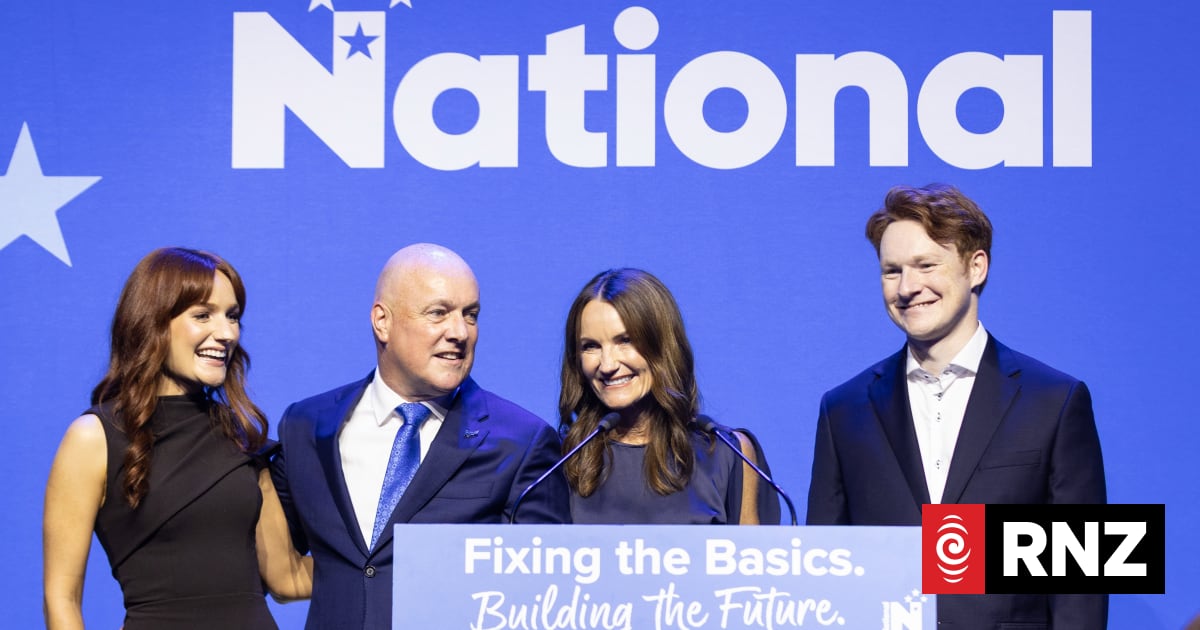
- New Zealanders voted on 7 November 2026 under MMP, the system in which the nationwide party vote sets each party’s share of seats, while extra “overhang” seats can make Parliament larger than 120 — this time, 131.
- All ordinary votes are in, Labour is slightly ahead on the party vote, National is ahead on seats, and neither leader claimed victory.
- (RNZ, BBC) The ballots still sealed are special votes, so who actually governs is not known until the official count.
How the views differ
State media, independent media and top voices on X
National-leaning readers and the parties already aligned with National
National has more seats than Labour, and those two partners take the group to a projected 67.
That is read as a slim majority already assembled, not a coalition still to be built.
Special votes are not ignored, but they are treated as unlikely to wipe the pathway out, even while a formal win is not being declared.
- rnz.co.nz (Ind.)
- reuters.com (Ind.)
- bbc.co.uk (St.)
- theguardian.com (Ind.)
Labour-leaning readers waiting on a leftward shift in special votes
A 0.2-point lead is small, but it is treated as the real election-night verdict, with the seat table still unfinished.
Because special votes have usually helped left-leaning parties, a right majority built without them is called provisional.
If the shift is large enough, that majority could disappear and talks on the left could start. On this reading, the result stays fully open until 27 November.
- rnz.co.nz (Ind.)
- theguardian.com (Ind.)
- reuters.com (Ind.)
- en.wikipedia.org (Ind.)
The preliminary count is verified, and it does not rest on one outlet. RNZ, Reuters, the BBC, the Guardian, and a Wikipedia summary of Electoral Commission data all point to the same split: Labour ahead by 0.2 points on the party vote, National ahead on seats, right bloc 67, left bloc 57, Opportunity 7, Parliament at 131 with 11 overhang seats. More than half of 131 is 66, so 67 is a majority by one seat on the votes counted so far.
Grey areas. Ask to dive deeper
Grok checks every side again and answers with sources.
Popular questions
Ask anything about this story. It's free with an account, 1 a week.
- 1993
A national referendum approves the introduction of the Mixed Member Proportional (MMP) electoral system.
- 1996
New Zealand holds its first general election under MMP.
Coverage
8 sources · 2 countries
- State-funded 8
NZGB
All sources
- RNZ (state-funded/public broadcaster)New Zealanders voted on 7 November 2026 under MMP, the system in which the nationwide party vote sets each party’s share of seats, while extra “overhang” seats can make Parliament larger than 120 — this time, 131. All ordinary votes are in, Labour is slightly ahead on the party vote, National is ahead on seats, and neither leader claimed victory. (RNZ, BBC) The ballots still sealed are special votes, so who actually governs is not known until the official count.State-funded · New Zealand
- BBC (independent)New Zealanders voted on 7 November 2026 under MMP, the system in which the nationwide party vote sets each party’s share of seats, while extra “overhang” seats can make Parliament larger than 120 — this time, 131. All ordinary votes are in, Labour is slightly ahead on the party vote, National is ahead on seats, and neither leader claimed victory. (RNZ, BBC) The ballots still sealed are special votes, so who actually governs is not known until the official count.State-funded · United Kingdom
- RNZ (state-funded/public broadcaster)Labour has 29.4% of the party vote and 36 seats; National has 29.2% and 42 seats. (RNZ, Wikipedia)State-funded · New Zealand
- Wikipedia (independent)Labour has 29.4% of the party vote and 36 seats; National has 29.2% and 42 seats. (RNZ, Wikipedia)State-funded
- The Guardian (independent)National, ACT and NZ First project to 67 seats, Labour, the Greens and Te Pāti Māori to 57, and Opportunity to 7, in a 131-seat Parliament with 11 overhang seats. (RNZ, Wikipedia, Guardian)State-funded · United Kingdom
- Reuters (independent)Each major party is below 30% of the party vote, the lowest since MMP began. (RNZ, Reuters)State-funded · United Kingdom
- rnz.co.nz“It is heartening to see that on the numbers so far, National is once again the largest party in Parliament and we have a pathway to forming the next government. But I have to tell you right now it is too close to call.” — Christopher Luxon (National leader and prime minister), RNZState-funded · New Zealand
- rnz.co.nz“Tonight New Zealand has spoken. It may take us a little bit longer to figure out what exactly it is that you've said. Every vote matters and every vote must now be counted.” — Chris Hipkins (Labour leader), RNZState-funded · New Zealand