#7Tech
NASA's Swift Observatory Re-enters Over North Sumatra After 22 Years
Swift, a 22-year NASA telescope, re-entered over North Sumatra with no reported injuries.
5 Nov 2026, 08:10 · All sides · Written by Grok
13 sources · 3 countries🇺🇸 🇬🇧 🇨🇳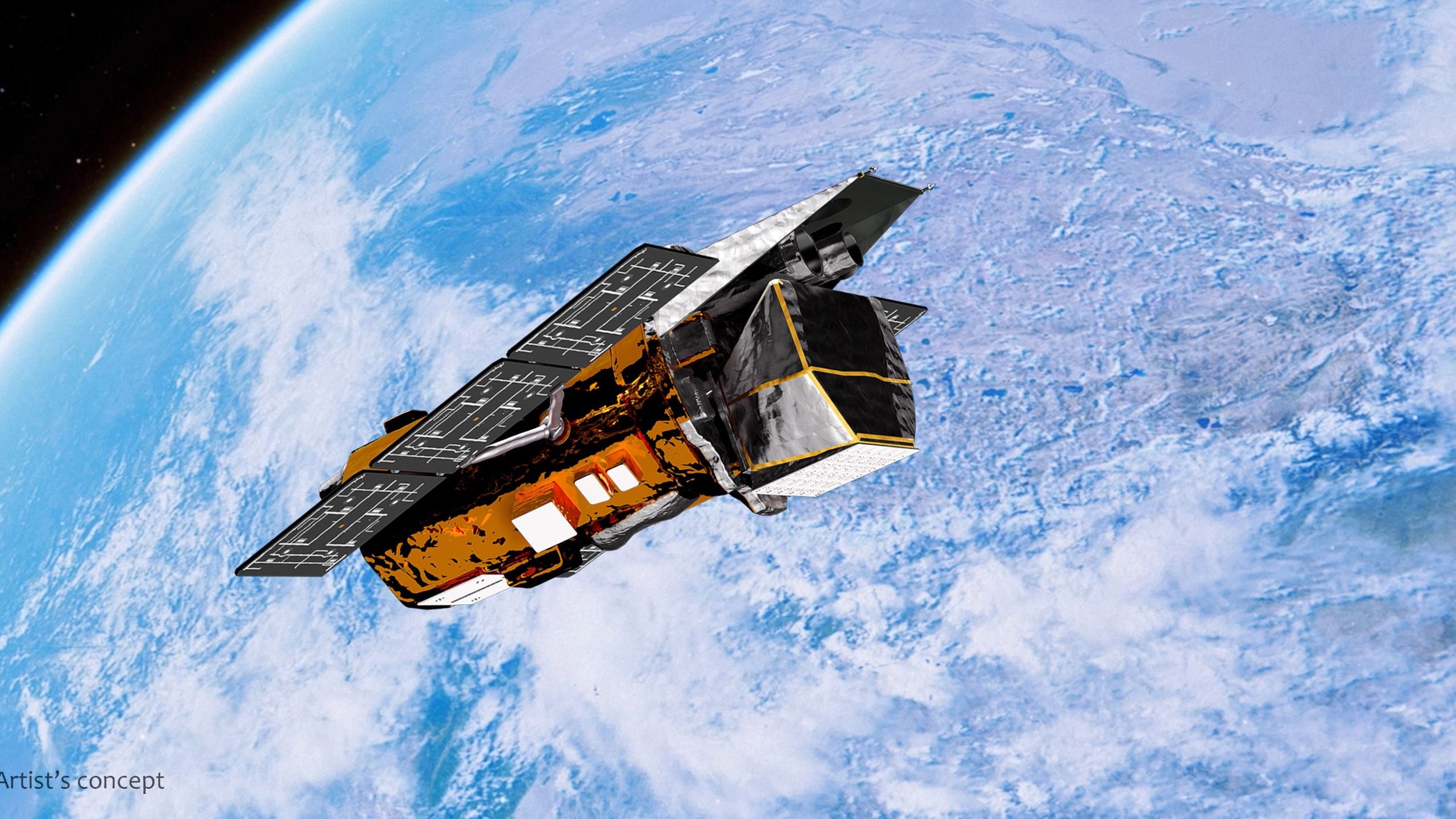
- NASA's Neil Gehrels Swift Observatory fell back into Earth's atmosphere on November 4, 2026, over North Sumatra, Indonesia.
- The U.S.
- Space Force confirmed the time and place. NASA expected most of the craft to burn up on the way down and reported no injuries or damage on the ground.
How the views differ
State media, independent media and top voices on X
Space-agency officials and mainstream science voices who call the ending routine and low-risk
This reading treats the fall as the last chapter of a job that lasted far past its design.
Air drag, boosted by an active Sun, pulled Swift too low to keep working, and the re-entry stayed inside forecasts already published.
A 1-in-2,100 chance of harm, followed by no reported injuries, is offered as proof the risk stayed negligible.
- reuters.com (Ind.)
- science.nasa.gov (St.)
- spaceflightnow.com (Ind.)
- scientificamerican.com (Ind.)
- english.news.cn (Ind.)
Debris-risk and disaster-prevention voices who read the overflight as a warning
This reading does not dispute Swift's science.
It argues that a low chance of harm is not a disposal plan: after the rescue craft failed, nothing steered Swift to empty ocean, and drag chose a track across North Sumatra.
A clean injury report, on this view, does not answer how the next satellite should be retired before the atmosphere picks the map.
- @TamanishaJohn (X)
- space.com (Ind.)
- thespacetap.com (Ind.)
- livescience.com (Ind.)
- View A — @rbclouston: "Update - NASA's Neil Gehrels Swift observatory telescope reentered Earth's atmosphere near North Sumatra, Indonesia, at 7:39am ET on 04 November. No reports of debris…" — [link]() Open on X ↗
- View B — @TamanishaJohn: "This thread from a researcher that studies 'atmospheric re-entry of man-made objects' notes that 'the fact that its fragments re-entered the atmosphere while passing over…" — [link]() Open on X ↗
The re-entry itself is solid. U.S. Space Force timing and location, reported by NASA and Reuters, put Swift over North Sumatra at 7:39 a.m. EST on Nov. 4, 2026, near 3.4°N, 98.6°E. The long science record, the Oct. 20 end of operations, the drag-driven drop below about 171 miles, and the failed July rescue are also reported by those accounts, not just by commentators. What is not confirmed is whether any piece reached the ground.
Grey areas. Ask to dive deeper
Grok checks every side again and answers with sources.
Popular questions
Ask anything about this story. It's free with an account, 1 a week.
- 2004
11-20: Swift launched.
- 2026
07: Katalyst Space's LINK spacecraft attempted a rescue.
Coverage
13 sources · 3 countries
- Official 1
- State-funded 5
- Independent 4
- X / on the ground 3
USGBCN
All sources
- NASA Science (official blog) (government)Swift launched on Nov. 20, 2004, and re-entered at 7:39 a.m. EST (12:39 GMT) on Nov. 4, 2026, near 3.4°N, 98.6°E. NASA ReutersState-funded · United States
- Reuters (independent)Swift launched on Nov. 20, 2004, and re-entered at 7:39 a.m. EST (12:39 GMT) on Nov. 4, 2026, near 3.4°N, 98.6°E. NASA ReutersState-funded · United Kingdom
- spacepolicyonline.comScience operations ended Oct. 20, 2026, after upper-air drag, strengthened by solar activity, dropped the orbit below about 171 miles (275 km). Reuters Space Policy OnlineIndependent
- science.nasa.govBuilt for two years, Swift ran nearly 22, observed more than 2,000 gamma-ray bursts, and supported about 7,000 scientific papers. NASAOfficial · United States
- Spaceflight Now (independent)Sources: NASA (government); Reuters (independent); Spaceflight Now (independent); Scientific American (independent); Xinhua (state-funded, China).State-funded
- Scientific American (independent)Sources: NASA (government); Reuters (independent); Spaceflight Now (independent); Scientific American (independent); Xinhua (state-funded, China).State-funded · United States
- Xinhua (state-funded, China)Sources: NASA (government); Reuters (independent); Spaceflight Now (independent); Scientific American (independent); Xinhua (state-funded, China).State-funded · China
- @TamanishaJohn"The fact that its fragments re-entered the atmosphere while passing over inhabited islands…from a disaster prevention perspective [this] is not something to be happy about." — researcher studying atmospheric re-entry of man-made objects, shared by @TamanishaJohnX / on the ground
- Space.com (independent)Sources: Space.com (independent); The Space Tap (independent); Live Science (independent); X post sharing the researcher thread.Independent
- thespacetap.comSources: Space.com (independent); The Space Tap (independent); Live Science (independent); X post sharing the researcher thread.Independent
- livescience.comSources: Space.com (independent); The Space Tap (independent); Live Science (independent); X post sharing the researcher thread.Independent
- @rbcloustonView A — @rbclouston: "Update - NASA's Neil Gehrels Swift observatory telescope reentered Earth's atmosphere near North Sumatra, Indonesia, at 7:39am ET on 04 November. No reports of debris having been found, injuries or property damage #NASA #space" — linkX / on the ground
- @thefactitoriumView A — @thefactitorium: "Update: NASA confirms Swift re-entered at 7:39 AM ET over North Sumatra, Indonesia. Observers in Malaysia saw it burn up. No damage or injuries reported. 22 years on a two-year warranty. Rest easy." — linkX / on the ground